
Smart Ways to Install a Fibreglass Pool on a Sloped or Difficult Block

Sloped blocks often scare property buyers away. They look at a steep gradient and immediately picture nightmare earthworks and spiralling costs. But a difficult site actually presents a massive design advantage. Flat backyards are easy. Sloped yards demand creativity. They create natural elevation. They allow for stunning infinity edges. With the right structural approach, dropping a premium fibreglass pool into a tricky block is completely achievable.
Mastering the Cut and Fill Strategy
Gravity always wins. When installing a swimming pool on a severe slope, the earth simply has to move. The traditional cut and fill method carves out the high side of the block. That excavated soil then builds up the lower side. It sounds incredibly simple. It rarely is.
Compacted fill dirt needs serious time to settle. Dropping a heavy fibreglass shell straight onto fresh, uncompacted fill is a recipe for absolute disaster. The ground shifts. The pool structure cracks.
Engineered retaining walls solve this headache completely. A robust masonry block or steel-post sleeper wall holds back the high side of the yard. This creates a highly stable, perfectly level bench for the pool shell to rest on. Take a firm stance on this phase. Never skimp on retaining wall engineering. A heavily reinforced retaining wall certainly adds upfront cost to a project. Yet it single-handedly prevents catastrophic structural failure down the track.
Going Partially Above Ground
Who says a swimming pool must sit completely flush with the grass? Fibreglass pools offer incredible installation versatility. Many modern fibreglass shells are specifically engineered as freestanding structures. They can sit partially or completely above the natural ground level.
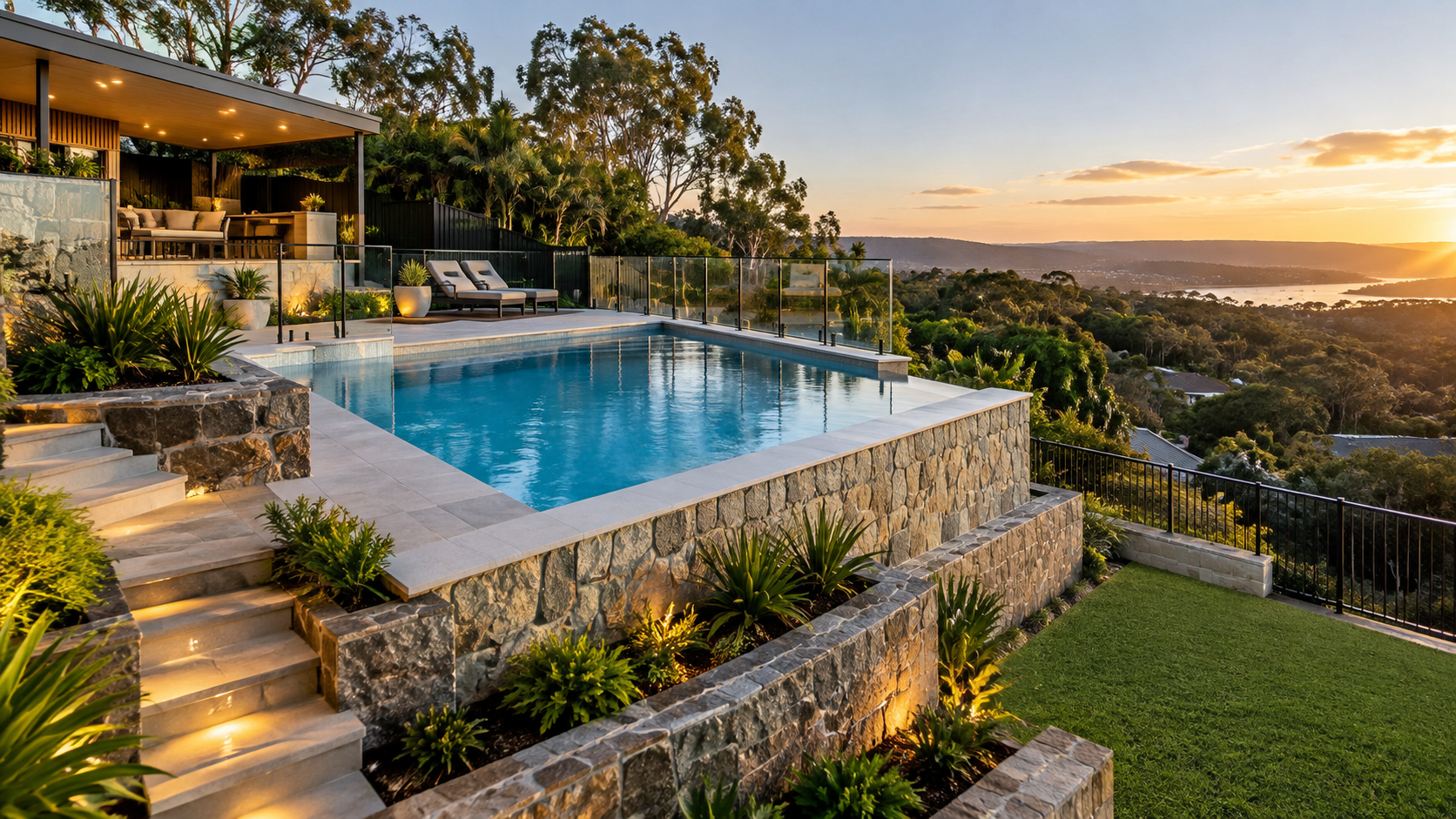
This tactic actively slashes excavation costs. Instead of digging a massive, expensive hole into solid rock or stubborn shale, the pool shell rests on a flat, heavily reinforced base pad. The exposed sides then get cladded. Think natural stone veneer, hardwood timber decking, or sleek rendered blockwork. It instantly turns the pool into a prominent architectural feature rather than just a hidden hole in the ground.
Installations on a 15-degree slope frequently use this hybrid approach. The upper side of the pool sits perfectly flush with the existing house patio. The lower side stands tall above the downhill slope. It isn't just practical. It looks absolutely brilliant.
The Essential Concrete Ring Beam
Fibreglass pools require serious structural integrity. The shells naturally flex. On a completely flat site, the surrounding compacted earth provides essential backfill support against the walls. On a sloped site with exposed outer edges, that lateral support has to be artificially created from scratch.
Enter the concrete ring beam.
This thick, heavily engineered band of poured concrete tightly wraps around the top lip of the entire pool shell. It locks the fibreglass structure firmly in place. It absolutely prevents the walls from bowing outwards under the immense, shifting weight of thousands of litres of water. Getting this structural pour exactly right is critical. Expert Sydney concreters handle these high-stakes structural pours daily, ensuring the dense beam ties seamlessly into the surrounding foundational footings without cracking under pressure. Precision matters immensely. A single millimetre out of level becomes glaringly obvious the second the waterline hits the edge.
Solving the Complex Drainage Puzzle
Ever wondered why some hillside pools shift out of level after a heavy storm? Water constantly flows downhill. It's an unavoidable fact of nature. If a pool sits at the very bottom of a steeply sloped block, every single drop of rain that hits the backyard will rush straight towards it.
Stormwater management ultimately makes or breaks a difficult site installation. Skip the proper agricultural drains and the entire surrounding area quickly turns into a muddy swamp. Saturated, boggy soil expands rapidly. It puts massive, unpredictable hydrostatic pressure directly onto the outside of the fibreglass shell.
The fix is structural drainage. Install heavy-duty strip drains directly behind every single retaining wall. Run thick agricultural pipes entirely around the base of the pool perimeter. Connect everything directly out to the main street stormwater system. Keep the foundation dry and the pool stays locked in place. Site data consistently shows that aggressive stormwater diversion prevents the vast majority of soil-shifting issues on steep blocks.
Softening the Hard Engineering
Difficult blocks require serious, heavy-duty structural work. Concrete blocks. Steel posts. Massive retaining walls. Left completely bare, the backyard space easily ends up looking like a commercial construction site.
Clever pool landscaping softens these harsh structural lines. Cascading native Australian plants trailing over the hard edge of a high retaining wall instantly blur the boundary between the engineering and the garden. Strategic planting on terraced levels draws the eye upwards. It perfectly distracts from the sheer, imposing height of the retaining structures below.
Tiered decking serves as another brilliant visual solution. Building wide timber or composite decks at varying heights negotiates the slope naturally. It creates distinct, usable outdoor zones. A sun-lounging area positioned up top. A shaded dining space tucked down below. The slope stops being a frustrating problem. It becomes a multi-level entertaining feature.
Ready to finally transform that stubborn, steeply sloped block into an aquatic masterpiece? Stop putting the project off. The right structural engineering and a premium fibreglass shell can conquer almost any difficult terrain. Contact us today to book a comprehensive site inspection and bring that challenging backyard to life.